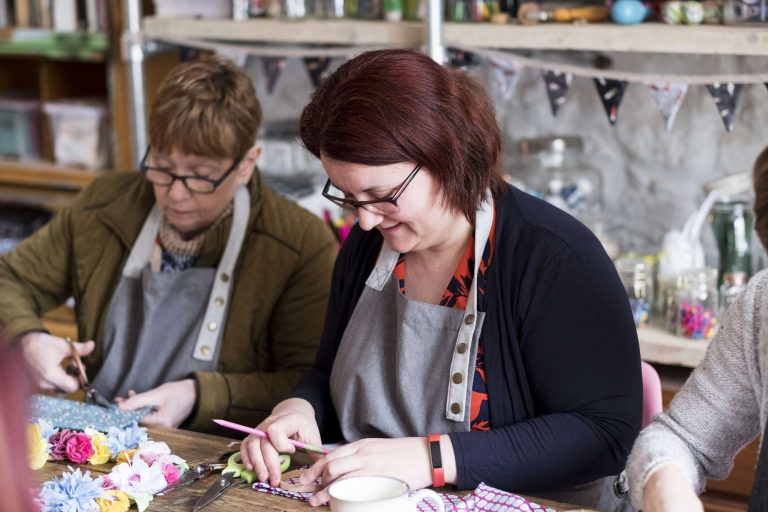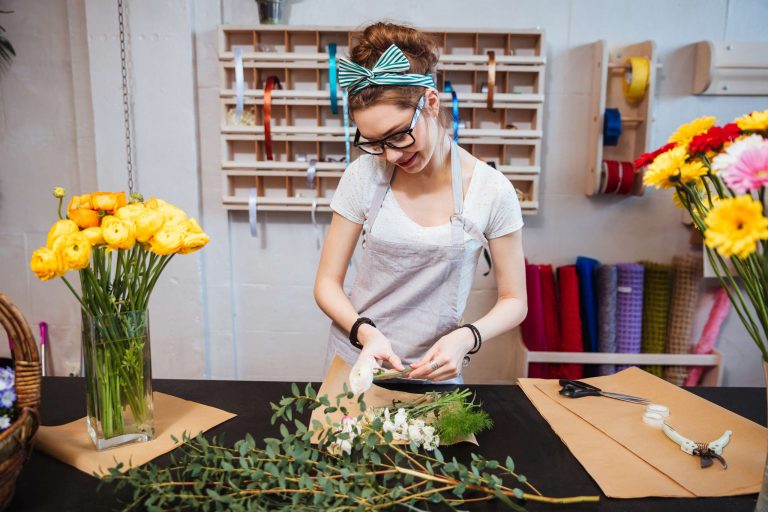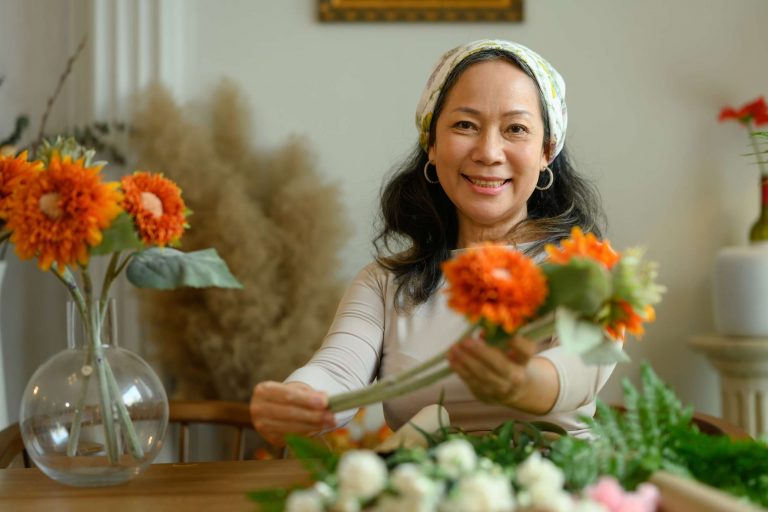
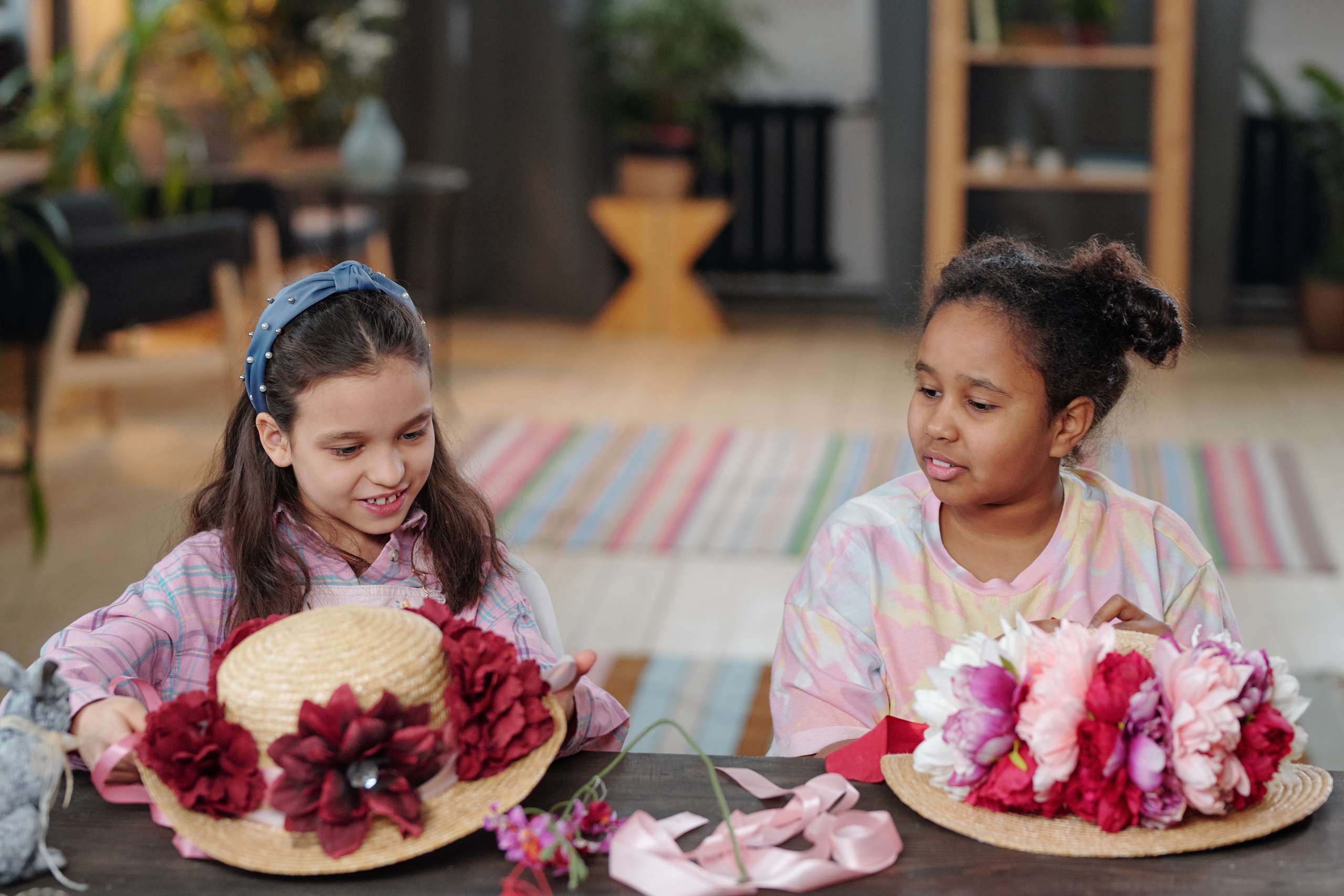
A common misconception of beginners is that they need to have dozens of flowers, with complex shapes and dramatic color combinations to make beautiful arrangements. In most cases, simple flower arrangements will look more harmonious and beautiful than the complex ones, especially for beginners. With a small number of flowers, you are forced to pay attention to the proportions between the flowers, the direction of the stem and the petals of each flower. Unlike complex flower arrangements where you can easily hide errors and imperfections, a simple flower arrangement shows the interaction between flowers, making the practice more effective.
How to practice flower arrangement with a limited number of flowers
- Take just 3-5 flowers and place them in a small vase or container. Select flowers of varying heights so that your arrangement can create movement.
- Observe each flower before placing it in the vase. Look at how each stem curves, the shape of the petals, the position of the leaves and which direction the flower head is pointing to. Avoid having to bend the stem in unnatural directions when making flower arrangements.
- Let your arrangement develop organically by placing the longest stem in the vase first and then placing the rest of the stems at an angle to it. If you find your arrangement is becoming too structured, try removing a flower and then placing it back in the vase instead of adding another one. Learning to restrain yourself is an important habit to cultivate when it comes to flower arrangement.
The most common mistake I see beginners making is trying to achieve balance and symmetry too early. Perfectly symmetrical flower arrangements can look contrived and unnatural. Real flowers rarely grow in straight lines, so trying to achieve perfect balance on either side of the vase can take away the beauty and personality of the flowers. Instead of counting the number of stems on each side of the arrangement, think about the weight of each stem. A larger bloom may balance out two smaller ones, and a sprig of foliage can soften a tight cluster. If your arrangement is looking lopsided, try rotating the vase slowly and looking at it from all angles. Sometimes just tweaking one stem can bring balance back to your arrangement.
Practicing for just a quarter of an hour each day can help you cultivate your floral design skills. Take 15 minutes each day with a few flowers and a small vase. Start by placing one stem into your vase and adjusting it until it looks stable and beautiful. Add one more stem to your arrangement and observe how the two flowers relate to each other. Keep going, taking time to look at the overall arrangement after each addition. If it starts to look crowded, try removing a stem and starting again rather than just adding more flowers. This process will help you cultivate your awareness of proportions and negative space without having to tackle complicated arrangements.
As you practice, you will start to develop a sensitivity to balance and harmony, texture and depth, and movement and flow. Someone who is practicing with a limited number of flowers each day will improve faster than someone who is trying to make large floral arrangements each day. Your hands will learn to feel how the flowers can support each other, and your eyes will learn to detect when your arrangement is looking tense. Even experienced florists will practice simple flower arrangements to hone their design skills. With fewer flowers to distract you, each addition and tweak becomes a conscious decision.