When you start out, an arrangement can be disorienting to analyze. It looks good from this side, but not so great from that side, and it’s hard to tell why it feels just a little bit “off.” Learning to see balance in an arrangement is a matter of developing your eye for space, height and visual weight, and it will come to you over time with practice, especially if you make sure to look at your arrangement from all sides, not just the front.
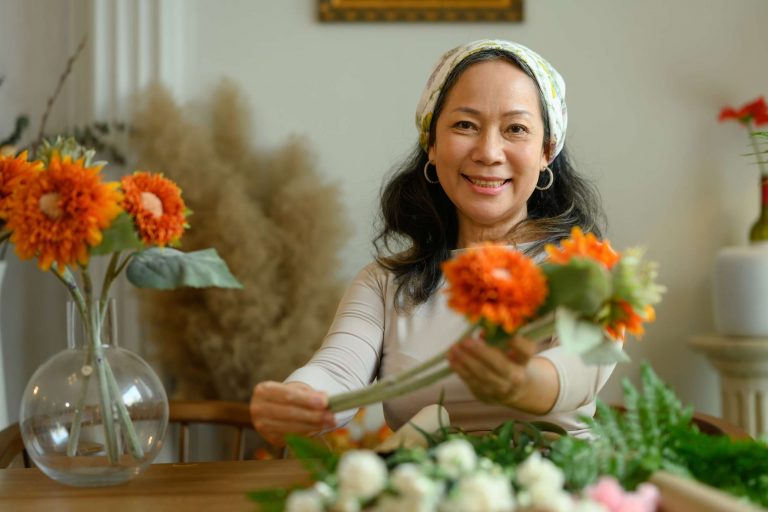
Start with just a few flowers in a simple vase. Place the first few stems, then stop, take a step back and pause before adding another flower. Instead, slowly turn the vase, and examine how the arrangement looks from all sides. Sometimes a flower that looks great from the front feels crowded when viewed from the side. Turning the vase will help you spot these kinds of issues. Take a stem up in height or angle it slightly until the shape feels good from multiple viewpoints.
The tendency of new students is to focus too much attention on the tallest flower. While height is important for creating movement, fixating on a single stem will make your arrangement feel top heavy. All of the flowers will get squished at the bottom of the vase while one bloom occupies all of the upper space. Instead, think of the visual weight of each stem, not just how tall it is. A big bloom toward the base of a vase can balance a taller stem above it. When something feels off, try bringing the tallest stem down just a hair or sliding a big bloom outward a little bit to better distribute the overall visual weight of the arrangement.
You can sharpen your sense of balance with a quick daily exercise. Take just 15 minutes to arrange 4 or 5 stems in a vase, then slowly turn the vase while looking at the shape. Bring one stem down a bit and turn the vase again. Practicing the simple exercise of adjusting and looking will teach you to see the difference that tiny changes in space and proportion can make. If the arrangement starts to feel crowded, pull one of the blooms out and observe how the empty space affects the overall balance.
As you practice, balance will get easier and easier to achieve without so much tweaking. Your arrangement will begin to take shape on its own because you’ll be able to see in advance how each bloom will affect it. Small adjustments in angle and placement will start to feel significant and your overall structure will become more deliberate. With a daily practice of observing your work like this, you will soon gain confidence in your ability to craft arrangements that feel calm, stable and beautiful from all sides.